Fake Job Offers on LinkedIn: How to Detect Them and Protect Yourself
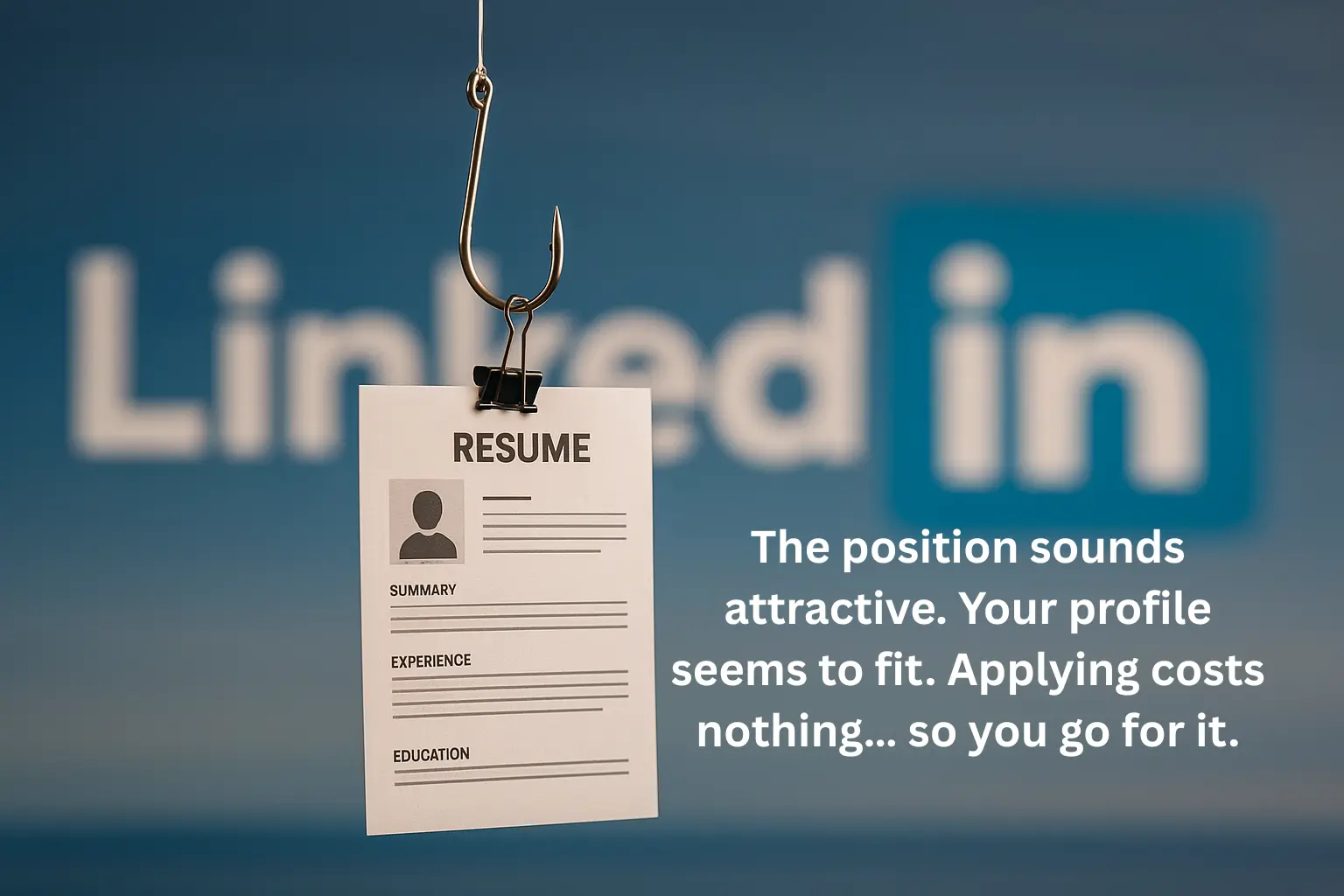
💡 LinkedIn isn’t only a job network anymore. It’s also a playground for skilled scammers. Learn to spot their tactics before they affect you.
LinkedIn is one of the most valuable platforms to find jobs and build professional networks. Its popularity, however, has also attracted malicious actors who post fake job offers to collect data, inflate artificial visibility, or even scam trusting professionals.
🔍 Has this happened to you?
Imagine this: you see a polished job ad. The position sounds attractive. Your profile seems to fit. Applying costs nothing… so you go for it.
Hours later, someone messages you on WhatsApp with a suit-and-tie profile photo and an upbeat tone:
“Hi! I’ve seen your application for a commercial opportunity. Can we jump on a 5-minute video call?”
You accept, and when the conversation starts… you discover it’s not an interview but an informal pitch tied to multi-level marketing schemes often questioned in public forums.
Or worse: you’re told that to continue you must download an external app, register and upload your CV. Then—silence. The ad disappears. But your data is already circulating.
These situations have been widely reported by users on LinkedIn, Reddit and job forums. The professional façade is often just that—a façade.
🌐 What fake offers on LinkedIn really want
-
Harvest your personal and professional data
They request your email, phone, address, CV—even ID. That information lands in databases that are sold, traded or used for impersonation fraud and aggressive marketing. -
Inflate profiles with fake followers and engagement
They use broad headlines like “We’re hiring across Spain” and push comments/shares to generate thousands of interactions that boost credibility and algorithmic reach. -
Redirect you to fraudulent or malware-ridden sites
Many ads lead to external portals without HTTPS, with trap forms that mimic hiring processes but exist only to steal data. -
Promise jobs to sell trainings or fake processes
Some run fictitious pipelines where, to “move forward,” you must pay for a test, training or software. It’s a façade to monetize your job search urgency.
📊 Numbers and real cases
- In 2024, online job scams caused losses of over €12.7 million in Australia (reported by mainstream media).
- In the U.S., major outlets reported networks of fake identities accessing remote roles and generating €15.8 million+ in illicit salaries.
- In Spain, the National Police has warned about viral ads that capture applicants and later extort or manipulate their personal data.
⚠️ Clear red flags that a job ad is suspicious
- No concrete job details, conditions or direct contact.
- New/empty profile, thin posting history or obvious errors.
- Forced move to external channels (Telegram, WhatsApp, non-official links) or requests to download an app.
- Sensitive data requested at the very first touch.
- Suspiciously generic engagement (hundreds of “Interested” comments).
🏢 What is LinkedIn doing about it?
LinkedIn has rolled out technical and operational measures to reduce fraud. While protection has improved, some fake offers still slip through—especially those using ambiguous language, persuasive tactics or real brand names. Here’s how LinkedIn acts:
- Company verification: validates corporate accounts with professional domains and official data.
- AI detection: flags suspicious patterns and auto-blocks accounts.
- Human review: investigates reports and removes fraudulent content.
- Clear policies: explicit bans on fraud, impersonation and spam.
- Reporting tools: let users flag profiles, ads or messages.
- Security alerts: warn or block actions when real-time risks are detected.
- User education: resources to recognize scams and stay safe.
Current limitations: despite these efforts, many scams operate temporarily before detection. Your own vigilance remains essential.
🛡️ How to protect yourself
- Verify the company on its official website and careers page.
- Do not share sensitive data without a real interview.
- Use updated antivirus and secure browsers.
- Report suspicious ads or messages.
- Always check the domain (HTTPS and official URLs) before clicking.
⚖️ Final reflection: Visibility at any cost isn’t a strategy
If you’re part of a company, agency or marketing strategy that uses fake offers or manipulative tactics to attract traffic, generate leads or fake authority, it’s time to pause and consider the consequences:
“The algorithm may reward you today. Your reputation will punish you tomorrow.”
Deceptive tactics can boost short-term metrics, but they destroy trust, stain your brand and exclude you from serious markets. If you want sustainable results, choose ethics and transparency.
🔒 Outsourcing Planet helps you grow—without tricks
We attract clients, leads and talent through real processes and strategies that work.
🔍 Want to audit your acquisition process?